Winter readiness

Winter Readiness for Standby Generators: An Ontario Facility Manager’s Checklist

Don’t wait for the first winter blizzard to find out if your standby power system is ready. Check out GenWorx’s pre-winter checklist covering block heaters, battery health, coolant freeze protection, and fuel management for Southern Ontario commercial and industrial facilities.

When winter storms hit Southern Ontario, the utility grid takes the brunt of ice, freezing rain, and high winds. For commercial facilities, residential complexes, and industrial sites, a standby generator isn’t just backup power—it’s what keeps pipes from freezing, security systems online, and critical operations running.

However, severe cold poses unique challenges to emergency power systems. A generator that ran smoothly in July can easily fail to start in January if cold-weather safeguards aren’t in place.

To ensure your system responds instantly when the grid goes down, here is a practical winter readiness checklist for facility teams and property managers.
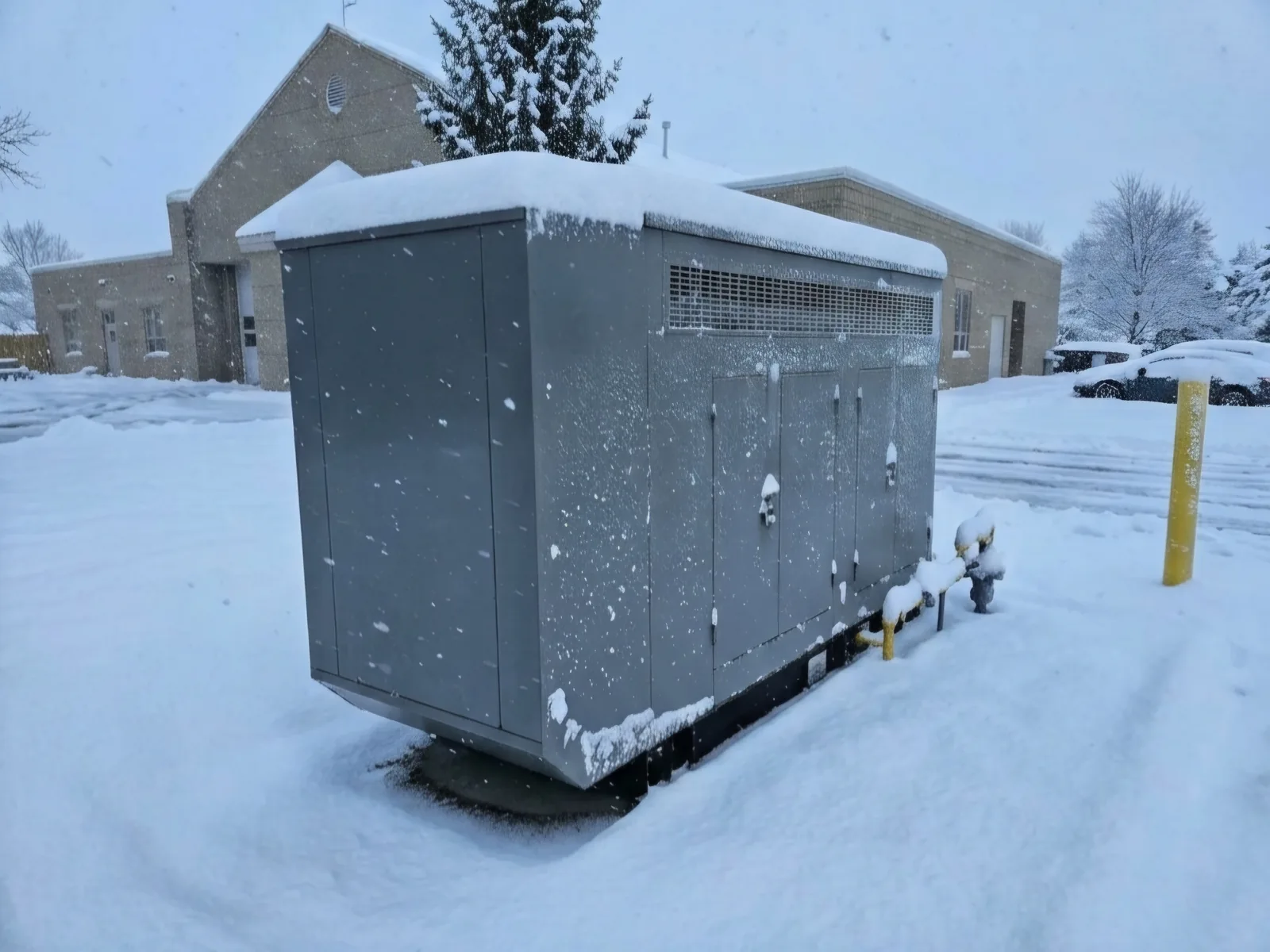
Standby generator covered in snow outside a building, kept ready with a winter readiness checklist
The checklist

Six Essential Winter Readiness Steps for Commercial Standby Generators

01

Inspect and Test the Engine Block Heater

In sub-zero temperatures, engine oil thickens and battery performance drops significantly. Block heaters keep the engine block warm, allowing for easy starting and immediate load acceptance.

  • What to check: Verify that the block heater is energized and actively maintaining engine temperature. Touch the heater housing or engine block (carefully) to confirm it feels warm.
  • Red flag: A cold engine block in freezing weather often indicates a burned-out heating element, a tripped breaker, or a faulty thermostat.
02

Check Coolant Strength and Freeze Protection

Engine coolant does more than prevent overheating during summer runs; it prevents the engine block from cracking when ambient temperatures drop below freezing.

  • What to check: Use a refractometer or hydrometer to test the coolant’s glycol concentration. The mixture should typically offer protection down to at least -35°C to -40°C for Ontario winters.
  • Maintenance tip: Ensure the coolant level is topped off and check hoses for signs of stiffness, cracking, or leaks.
03

Test Battery Health and Clean Terminals

Batteries are the single most common reason a standby generator fails to start in winter. Cold weather drastically reduces a battery’s cranking power while simultaneously increasing the power required to turn over a cold engine.

  • What to check: Inspect battery terminals for corrosion or loose connections. Test the battery under load—not just static voltage—to verify its cold-cranking amps (CCA).
  • Rule of thumb: Most generator starter batteries have a lifespan of 2 to 3 years. If yours is approaching or past this mark, proactive replacement before winter is cheap insurance.
04

Manage Diesel Fuel and Prevent Gelling

Stored diesel fuel is particularly vulnerable to cold weather. Standard summer-grade diesel contains paraffin waxes that crystallize (gel) in cold temperatures, clogging fuel filters and starving the engine.

  • What to check: Ensure your bulk fuel storage has been treated with cold-weather anti-gel additives or topped off with winter-grade diesel.
  • Fuel quality: Check fuel tanks for water accumulation. Water sinks to the bottom of the tank and can freeze in fuel lines or filters, completely blocking fuel delivery.
05

Clear Enclosure Louvers and Air Intakes

Snowfall and ice buildup can block intake louvers, exhaust outlets, and radiator discharge vents.

  • What to check: Clear any snow, ice, or drifted debris from around the generator enclosure. Verify that motorized intake louvers open smoothly and are not frozen shut.
  • Safety note: Ensure exhaust discharge paths are entirely clear to prevent dangerous carbon monoxide buildup and engine backpressure.
06

Perform a Pre-Winter Exercise and Load Test

Running a standard weekly auto-exercise without load confirms the engine starts, but it doesn’t prove the system can handle a real power outage under winter conditions.

  • What to check: Schedule a full transfer test or annual load bank test before severe weather hits. This brings the engine up to operating temperature, burns off unburnt fuel deposits (wet stacking), and verifies that the Automatic Transfer Switch (ATS) seamlessly shifts the building load.
Talk to GenWorx

Don’t Wait for the First Ice Storm

Winter maintenance isn’t just about avoiding downtime; it’s about ensuring compliance and protecting your infrastructure. A brief pre-season inspection can catch minor issues—like a worn belt or a dying battery—before they turn into costly emergency calls during a blizzard.

Need a hand getting your generator winter-ready? Contact the team at GenWorx Power Systems to schedule a comprehensive pre-winter inspection and service run for your facility.

Keep reading

More from the GenWorx team

Upgrade an aging transfer switch

A control panel conversion instead of a full ATS replacement.

What is load bank testing?

A generator that starts is not a generator that works.

Why diesel goes bad in a standby tank

What happens inside the tank, and how to prevent it.